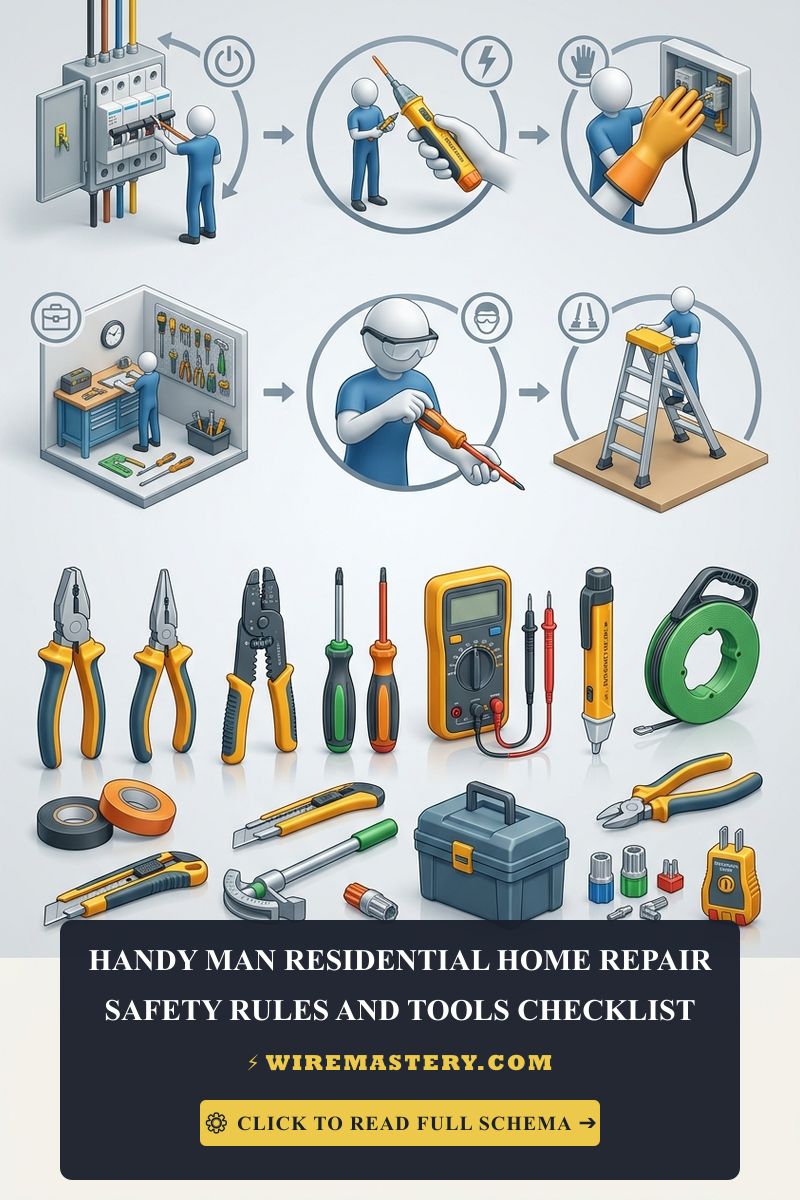
Handyman Residential Home Repair: Safety Rules & Tools Checklist
Executing residential home repairs requires a strategic balance between mechanical precision and proactive hazard mitigation. Whether managing minor drywall touch-ups or conducting comprehensive multi-wire junction configurations, transforming your workflow with professional safety benchmarks preserves property value and eliminates catastrophic injury risks.
This guide outlines general handyman safety rules, categorized mechanical and electrical tool checklists, and structural National Electrical Code (NEC) guidelines engineered specifically for United States residential frameworks.
Core Structural Safety Benchmarks
Before engaging any power tool machinery, establish your operational job site perimeter:
- Personal Protective Equipment (PPE): Strictly deploy ANSI-rated safety glasses, heavy-duty leather or high-dexterity work gloves, and steel-toed footwear.
- Atmospheric and Air Quality Controls: Utilize NIOSH-approved respirator masks during demolition or insulation phases to shield your respiratory tract from toxic fiberglass or particulate dust ingress.
- Voltage Isolation Protocols: Never assume a branch circuit is safe. Isolate the main breaker feed and confirm zero voltage states with calibrated field instruments before touching terminals.
Technical Materials and Handyman Tools Checklist
Operating a code-compliant residential repair workflow requires an organized, multi-tier toolkit. Avoid economy-grade multi-tools; high-yield structural tasks demand trade-specific hardware:
1. General Mechanical & Hand Tools
| Handyman Trade Tool | Primary Residential Purpose |
|---|---|
| Cushion-Grip Screwdrivers | Insulated flathead and Phillips drivers to torque terminal blocks and anchor faceplates safely. |
| Multi-Jaw Pliers Set | Needle-nose, tongue-and-groove, and linesman pliers for wire shaping and mechanical extractions. |
| Heavy-Duty Claw Hammer | For structural framing adjustments, driving framing nails, and wall demolition tasks. |
| 25-Foot Steel Tape Measure | Wide-blade measuring tool required for precision drywall cuts and cable routing paths. |
2. Low-Voltage & Electrical Installation Tools
| Electrical Trade Tool | Primary Residential Purpose |
|---|---|
| Digital Auto-Ranging Multimeter | To measure exact AC/DC voltages, continuity loop pathways, and resistance thresholds across circuits. |
| Precision Wire Strippers | Calibrated to shear outer insulation sleeves clean off 10 AWG to 14 AWG solid copper cores. |
| Non-Contact Voltage Detector | Audibly verifies that a junction box or wall receptacle is fully de-energized before trade work. |
| Impact Punch-Down Tool | For seating structured data conductors securely into local home automation network ports. |
Critical Residential Electrical Safety Considerations
Working around residential grid architecture is the highest-risk activity a handyman can encounter. Miscalculating wire capacities or bypassing overcurrent regulations can lead to fatal shock shocks or active electrical fires.
Deciphering Wire Gauge and Amperage Capacity (Ampacity)
The National Electrical Code regulates the exact conductor diameter required to carry load currents safely. Utilizing an incorrect wire profile violates federal building codes:
- 14 AWG Solid Copper: Rated for a maximum of 15 Amps. Standard profile for general residential lighting branches and bedroom outlets.
- 12 AWG Solid Copper: Rated for a maximum of 20 Amps. Required for small appliance circuits, kitchen countertops, and bathroom receptacles.
- 10 AWG Solid Copper: Rated for a maximum of 30 Amps. Dedicated loop profile for high-draw appliances (clothes dryers, water heaters).
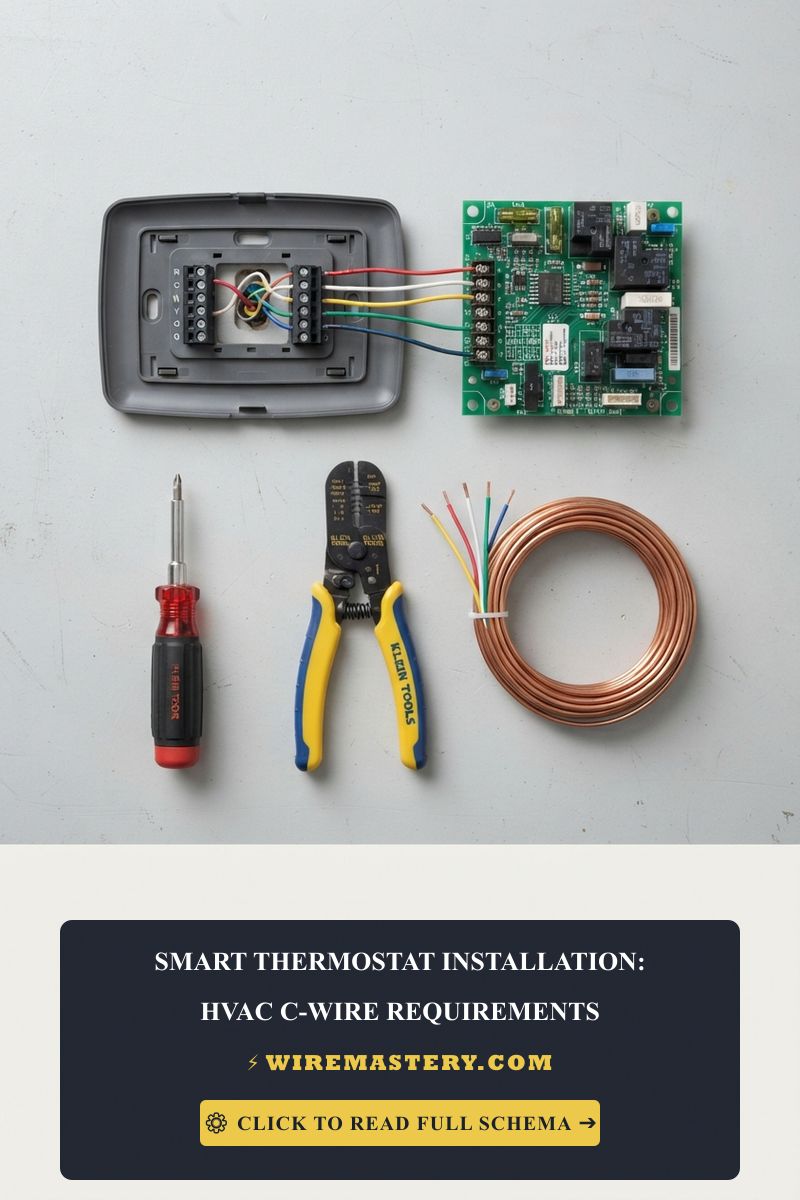
🛠️ Contractor Tool Management Note: Look closely at the professional tool layout displayed in our manual banner. Notice the high-visibility, organized configuration of insulated hand tools, precision hex sets, and heavy-duty drilling machinery. Maintaining clear segregation between your structural woodworking power tools and your insulated electrical measurement testers prevents cross-contamination of grease and preserves tool insulation integrity.
Step-by-Step Pre-Project Inspection Walkthrough
1. Job Site Energy Isolation
Prior to removing a single structural screw or utility cover plate, navigate to your property’s main service panel box. Disengage the branch circuit breaker powering the target zone. Use your non-contact voltage tester directly against the receptacle slots or junction wires to guarantee complete de-energization.
2. Environmental Hazard Mitigation
Clear the immediate floor perimeter of any tripping clutter or sawdust mounds. Ensure the workspace maintains adequate luminescent lighting using portable LED work lights. If working at heights, inspect your ladder frame for hairline fractures and maintain a strict three-points-of-contact climbing posture.
3. Tool Integrity Audit
Examine all electrical power tool cables for frayed jackets, exposed insulation, or compromised grounding prongs. Ensure all circular saws and reciprocating cutters maintain functioning spring-loaded blade guards. Damaged or modified tools must be labeled “Out of Service” immediately.
NEC Compliance & Official Safety Standards
Adhering to strict electrical codes keeps your property legal, insurable, and physically safe. The NEC mandates that all residential maintenance workflows comply with the safety enforcement rules detailed across NFPA 70 guidelines. This includes maintaining proper structural clearance zones around main distribution breaker panels, implementing arc-fault (AFCI) protection on living area branches, and installing tamper-resistant hardware across family spaces.
For current NFPA 70 guidance relevant to residential repair tools, electrical isolation, and basic wiring safety, consult the Official NFPA 70: National Electrical Code (NEC).
Conclusion
Placing safety rules at the absolute forefront of your home repair projects transforms simple DIY efforts into expert, home improvements. By stocking your toolkit with calibrated trade tools, respecting conductor AWG ampacity thresholds, and maintaining strict compliance with official NEC frameworks, you protect both your property investment and your family’s safety. Prioritize de-energization testing, invest in premium insulated equipment, and wire every project with code-compliant precision.