Emergency Electrical Services: Troubleshooting Cost Standards
Retaining an emergency residential electrical service or authorized 24/7 trade contractor to isolate an active localized combustion event, trace systemic voltage dropouts, or mitigate a split-phase master panel board failure demands an unshakeable alignment with real-world service pricing structures and immediate emergency field protocols. When a primary service entrance infrastructure undergoes catastrophic structural breakdown—such as an open service neutral line or an intense overcurrent breaker contact welding short circuit—homeowners face severe risks. Navigating these scenarios under tight time constraints requires looking past vague service definitions to decode precise trade cost matrices. Homeowners must recognize that emergency diagnostic dispatch parameters are governed by specialized labor rates, overtime operational overheads, and mandatory material certification minimums mandated by the National Electrical Code (NEC).
This procurement manual outlines the financial cost standards for emergency electrical troubleshooting, the operational economics of service dispatch fees, and safe field isolation methodologies.
Core Emergency Financial and Technical Parameters
Before authorizing a premium after-hours utility dispatch call or signing emergency field invoices, verify these core economic boundaries:
- The Baseline Dispatch Fee Index: Licensed contractors enforce a fixed emergency dispatch call fee floating between $150 and $300 for nights, weekends, and holiday intervals. This diagnostic fee operates independently of hourly labor rates and functions strictly to commit a certified truck and technician to the site location.
- The Premium Hourly Multiplier: Standard residential labor metrics averaging $75 to $125 per hour scale up dramatically during emergency conditions. After-hours field interventions are billed at Time-and-a-Half ($112.50 to $187.50/hr) or Double-Time ($150 to $250/hr) depending on local labor union boundaries.
- The Minimum Billing Increment: Emergency service calls universally carry a mandatory 2-hour minimum labor assessment floor, ensuring the contractor covers operational staging expenses even if the technical fault is cleared within the first ten minutes of arrival.
Technical Materials & Emergency Incident Response Toolkit
To monitor field operations safely and ensure your dispatched emergency contractor utilizes professional-grade, listed instrumentation on your property, reference this critical testing matrix:
| Emergency Field Instrument | Primary Engineering Purpose & Safety Certification |
|---|---|
| True RMS CAT IV Clamp Meter | Category CAT IV 600V certified to capture live service entrance conductor currents safely. |
| Non-Contact AC Proximity Tester | High-sensitivity sensor to audibly guarantee 100% de-energized boundaries before handling. |
| Infrared Thermal Laser Scanner | Maps active thermal hotspots across circuit breaker panel casing lines without contact. |
| ASTM F1505 Insulated Hand Tools | Pliers, square-drivers, and cutters certified to insulate skin from up to 1000V AC arcs. |
| Class 00 Dielectric Rubber Gloves | High-density protective gloves rated to block up to 500V AC continuous contact tracks. |
Emergency Circuit Sizing & Ampacity Safety Standards (NEC 310.16)
When an emergency technician replaces a charred terminal wire or restores a branch circuit that suffered insulation breakdown during an overcurrent event, the replacement conductors must match the load boundaries of NEC Table 310.16:
- 14 AWG Conductor Core (15-Amp Limit): White PVC protective wrap. Deployed strictly for low-density bedroom lighting runs and residential general convenience loops.
- 12 AWG Conductor Core (20-Amp Limit): Yellow PVC protective wrap. Mandatory for kitchen small appliance branch circuits (SABC), high-moisture bathroom nodes, and dedicated laundry lines.
- 10 AWG Conductor Core (30-Amp Limit): Orange jacket sheathing. Required for high-power continuous loads like dedicated clothes dryers and water heating element blocks.
Technical Phase 1: Real-World Cost Standards for Emergency Interventions
To protect your property investment and evaluate on-site contractor estimates with absolute analytical precision, map out your upcoming repairs against the standard nationwide emergency cost indices:
1. Main Overcurrent Circuit Breaker Replacements
When a standard single-pole or dual-pole breaker experiences an internal micro-arcing breakdown or welds its contact pads open due to intense downstream fault tracking, immediate replacement is required.
- Emergency Price Parameter: Standard commercial replacement costs float between $150 and $350 per breaker unit, combining the hardware material cost with premium emergency diagnostic hours.
2. Life-Safety GFCI / Receptacle Enclosure Upgrades
If an outlet inside a wet kitchen backsplash or bathroom vanity space burns out, emits a distinct acrid fish-like odor, or flashes active arc sparks, it demands immediate isolation.
- Emergency Price Parameter: Executing a code-compliant, Tamper-Resistant Class A GFCI replacement under emergency response terms ranges between $200 and $450 per location, including full loop verification testing. For a comprehensive breakdown of the internal mechanics driving these safety devices, follow our master engineering manual on GFCI outlet wiring connection and troubleshooting standard protocols.
3. Master Panel Upgrades and Critical Service Replacement Loop
If your visual inspection reveals structural melting over the primary bus bars, or if your property houses an obsolete distribution center prone to non-tripping latch failures, a complete subpanel or main panel overhaul becomes mandatory under life-safety enforcements. For a comprehensive forensic breakdown of these dangerous legacy systems, cross-reference our structural analysis on Federal Pacific panel hazards identification and contractor replacement guidelines.
- Emergency Price Parameter: Executing a complete utility-level changeover to install a brand-new 200-Amp master distribution panel center scales between $2,500 and $5,500, including administrative city permit filings and emergency utility service cut-off disconnections.
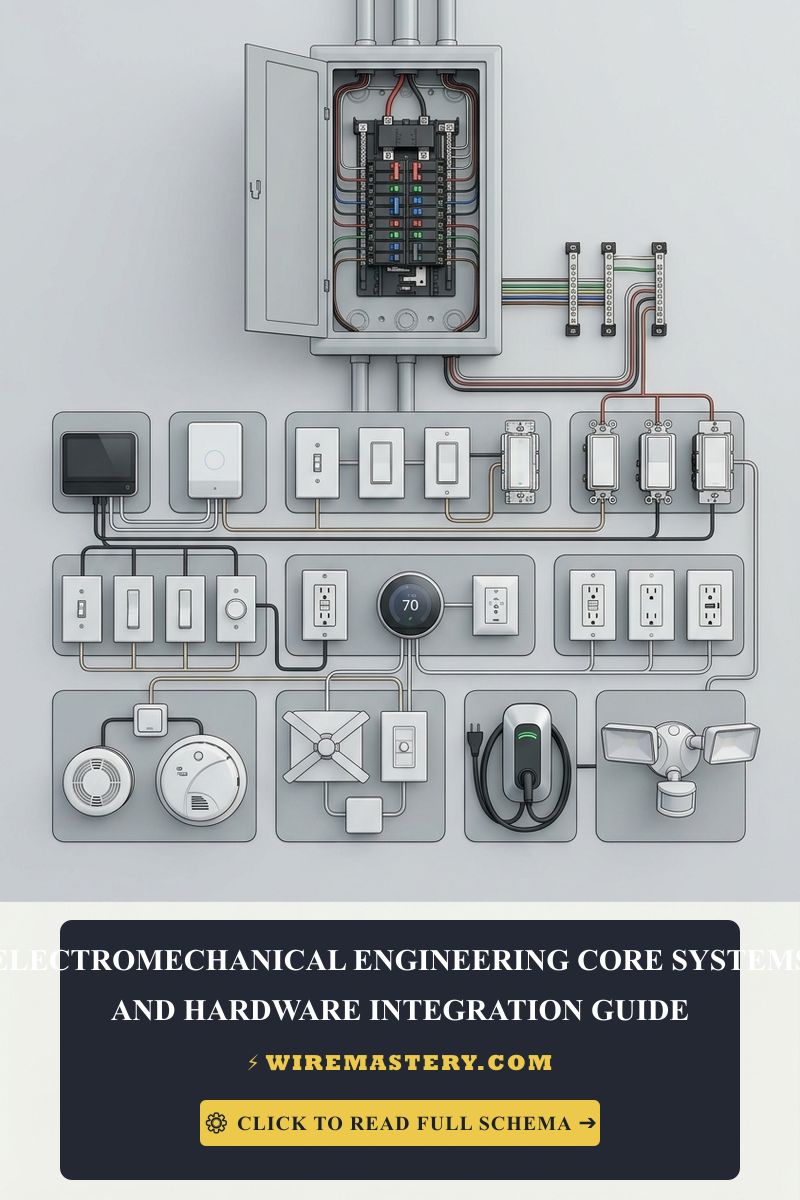
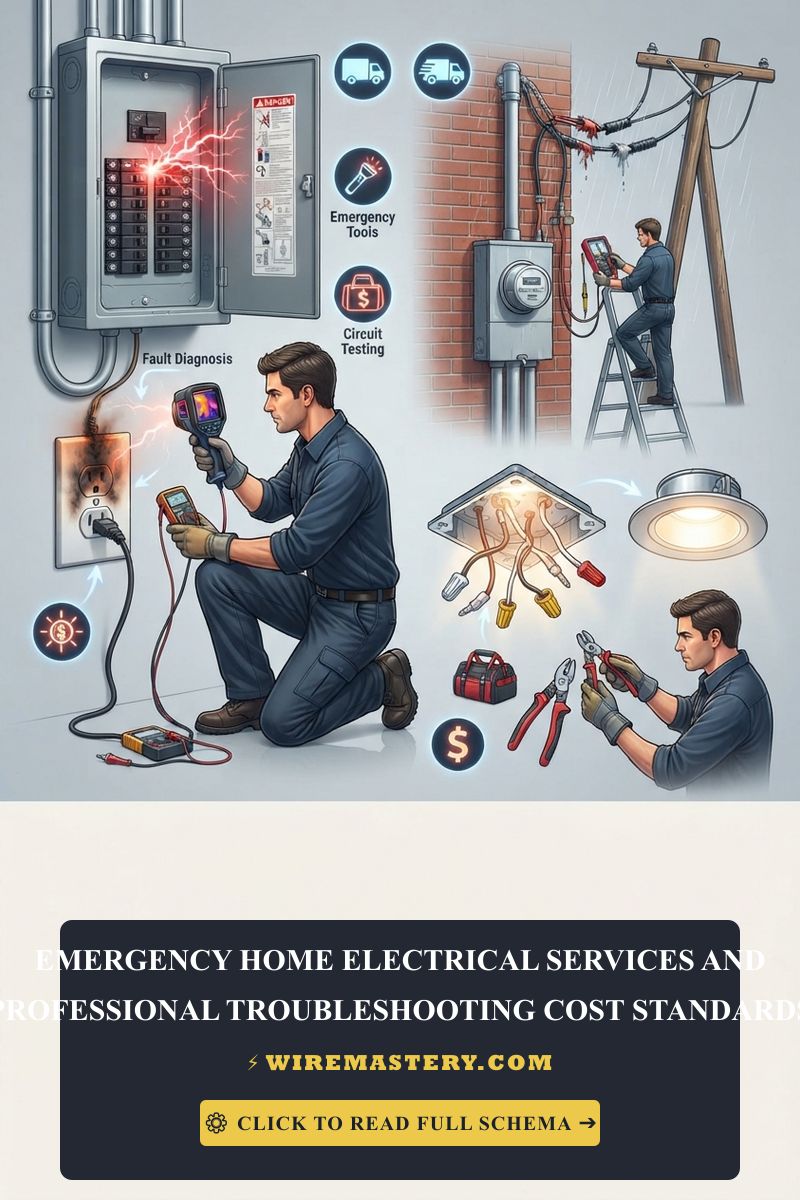
🛠️ The Preventative Inspection Dividend Note: Look closely at the split-phase distribution panel layouts and terminal assets showcased across our master troubleshooting portfolios. Standard industrial data shows that 85% of residential electrical emergencies—such as burnt main lugs or carbonized wire nut splices inside hidden wall cavities—develop gradually due to progressive loose play over multi-year thermal cycling stress cycles. Retaining a licensed Master Electrician to execute a non-contact infrared thermal laser subpanel sweep once every two years acts as an excellent, low-cost preventative mechanism that completely isolates and neutralizes circuit faults before they can escalate into a high-cost after-hours emergency crisis.
Troubleshooting Emergency Site Contractor Agreements & Price Creep
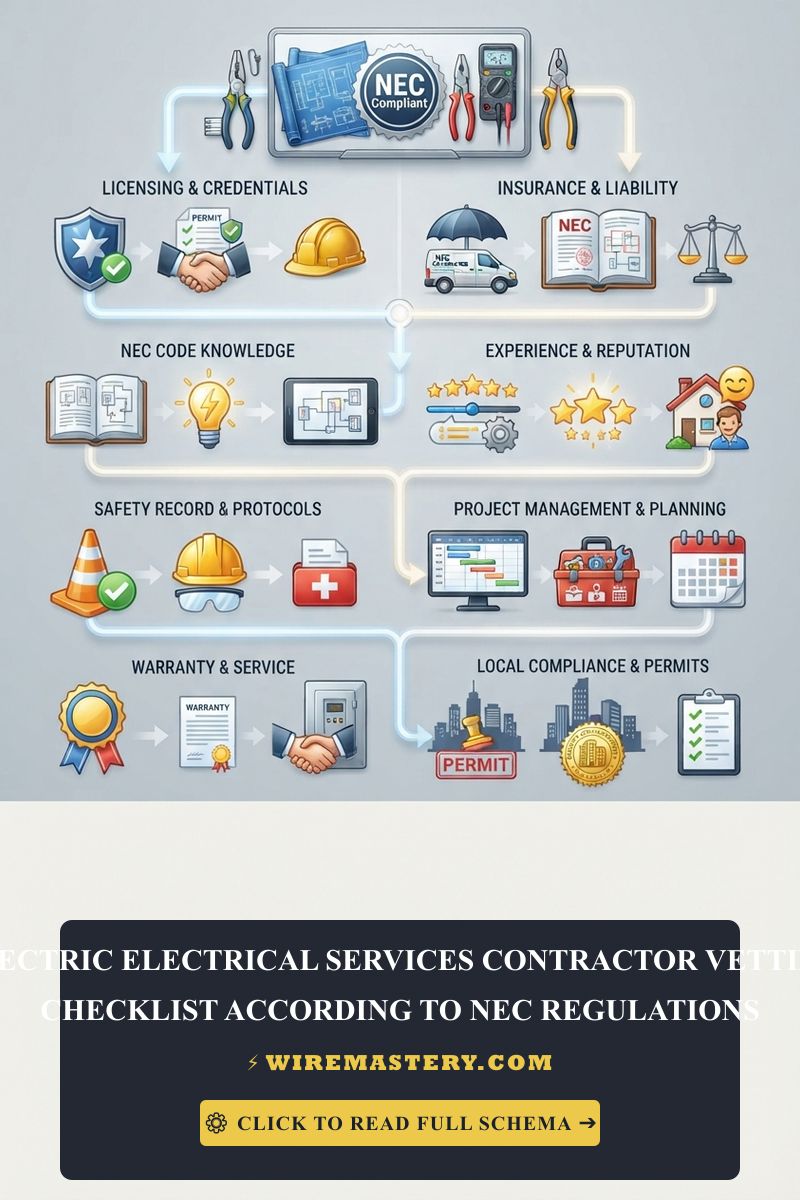
When an electrical emergency drops your home into absolute darkness or fills a room with acrid smoke, predatory un-licensed operators frequently exploit the structural chaos to artificially inflate project billing structures. Apply this rigid trade screening checklist to mitigate scope creep:
- The Operator Fails to Provide an Independent Upfront Price Ceiling: Never authorize an emergency field technician to begin cutting wires or pulling circuit breakers based on a vague verbal promise of “fixing it as we go.” Even during an active infrastructure crisis, a certified contractor must supply a written, line-item Not-to-Exceed (NTE) diagnostic estimate defining the exact pricing limits for the initial phase of work. If the technician refuses, deny access to the panel enclosure and contact an alternate licensed service block immediately.
- The Technician Identifies a “Dead Short” but Demands a Full House Rewire: An absolute indicator of predatory project scope expansion tracking. If a single branch circuit breaker trips magnetically, a code-compliant isolation strategy requires executing a systematic, unpowered “Cold” resistance audit to isolate the single compromised wall junction box. If the emergency operator claims the entire structure is compromised without executing formal insulation resistance matrices using a high-voltage megohmmeter instrument, halt the intervention immediately.
- The Final Billing Statement Includes Hidden “Hazardous Workspace” Fees: To eliminate post-repair financial friction, your signed entry invoice must explicitly state that the premium emergency labor multiplier covers all standard residential workspace constraints. Ensure you document the on-site technician’s arrival and departure timestamps to the exact minute to cross-verify the billing records with absolute analytical accuracy.
National Electrical Code Service Entrance Safety Regulations
Adhering to strict national structural regulations protects your home infrastructure from fire hazards, maintains full property insurance validity, and ensures full alignment with federal inspection safety boundaries. The National Electrical Code strictly regulates residential emergency service drops, distribution centers, and master clearances under NEC Article 110 (Requirements for Electrical Installations) and Article 230 (Services):
- The Main Disconnect Safety Clearance (NEC 240.24): All overcurrent protection devices and primary residential disconnect switches must be positioned in an easily accessible location. The master service switch grip handle, when shifted to its highest operational point, must never extend past 6 feet, 7 inches (2.0 meters) above the finished floor plane, ensuring immediate safety disconnect access during an emergency electrical catastrophe.
- The Continuous Working Space Mandate (NEC 110.26): Main distribution panels and emergency subpanel gutters must maintain an absolute, un-obstructed physical clear working area of at least 3 feet (36 inches) of front depth clearance and 30 inches of total width clearance from the deadfront shield. Utilizing electrical service spaces as household storage areas or stacking chemical containers adjacent to bus bar frames is a critical code violation that delays emergency power isolation.
For the NFPA 70 provisions relevant to this guide on Emergency Electrical Services: Troubleshooting Cost Standards, consult the Official NFPA 70: National Electrical Code (NEC).
Conclusion
This article explains emergency residential troubleshooting cost standards, evaluating after-hours premium labor multipliers with analytical precision, and executing systematic Live LINE vs. LOAD voltage matrices using CAT III certified instruments transforms chaotic home crises into highly controlled, predictable solutions. By keeping replacement conductor sizes fully aligned with NEC Article 310.16 ampacity charts, removing loose wire nut splices before progressive resistance faults can develop, and enforcing absolute compliance with NEC panel working clearance rules, you build an exceptionally resilient residential grid infrastructure. For final checks, complete utility subpanel power isolation checks before raw line handling, deploy certified True RMS multi-testers, and complete every diagnostic procurement step with safety-first precision.