What is Electrical Engineering? Main Branches & Applications
Electrical engineering is an expansive, foundational field of modern applied sciences and physical infrastructure engineering that dictates the generation, manipulation, transmission, and processing of electromagnetic phenomena and electrical energy systems. From megawatt-scale high-voltage alternating current (HVAC) utility distribution grids down to sub-nanometer solid-state semiconductor logic gates embedded within advanced automation processing units, this discipline forms the structural backbone of modern technological development. Navigating this vast sector requires isolating distinct sub-disciplines, each defined by unique mathematical models, operational frequencies, and rigid design standards governed by institutions like the Institute of Electrical and Electronics Engineers (IEEE).
This professional-grade reference manual outlines the primary branches of electrical engineering, macro-industry applications, and advanced laboratory testing frameworks.
Core Engineering Thresholds & Parameters
Before analyzing individual sub-disciplines, establish the macro-scale mathematical and physical constraints that govern all electrical architecture designs:
- Maxwell’s Equations: The absolute mathematical bedrock of the entire discipline. These four vector calculus equations dictate how electric fields (E) and magnetic fields (B) are generated, modified, and propagated through vacuum spaces and dielectric material mediums.
- The Power Factor Target (cos phi): In industrial energy systems, maintaining an optimized power factor closest to 1.0 (Unity) is critical. Progressive inductive phase lags cut network efficiency, demanding localized capacitor bank corrections to eliminate utility penalties.
- Signal Integrity Constraints: As signaling frequencies scale into the Gigahertz (GHz) spectrum, physical copper traces behave as transmission lines, demanding precise characteristic impedance matching to suppress destructive signal reflections.
Technical Materials & Engineering Laboratory Instrumentation
Developing, prototyping, and auditing advanced electrical frameworks requires precise laboratory equipment and diagnostic field instruments distinct from basic building trade tools:
| Engineering Lab Instrument | Primary Technical Purpose & Application Spectrum |
|---|---|
| Digital Storage Oscilloscope (DSO) | Captures and visualizes high-frequency wave amplitudes, phase shifts, and fast transient pulse widths over time. |
| True RMS Digital Multimeter | Measures ultra-low micro-ampere (µA) current leaks and line-voltage drops with zero harmonic distortion. |
| Programmable DC Power Supply | Delivers highly regulated, low-noise continuous current loops (0V to 60V) to drive prototype logic boards. |
| RF Vector Network Analyzer (VNA) | Measures high-frequency scattering parameters (S-parameters) across complex high-speed communication tracks. |
| Calibrated Spectrum Analyzer | Maps active radio frequency spectrum footprints to isolate stray electromagnetic interference (EMI) contours. |
Deep-Dive: The Core Pillars of Electrical Engineering
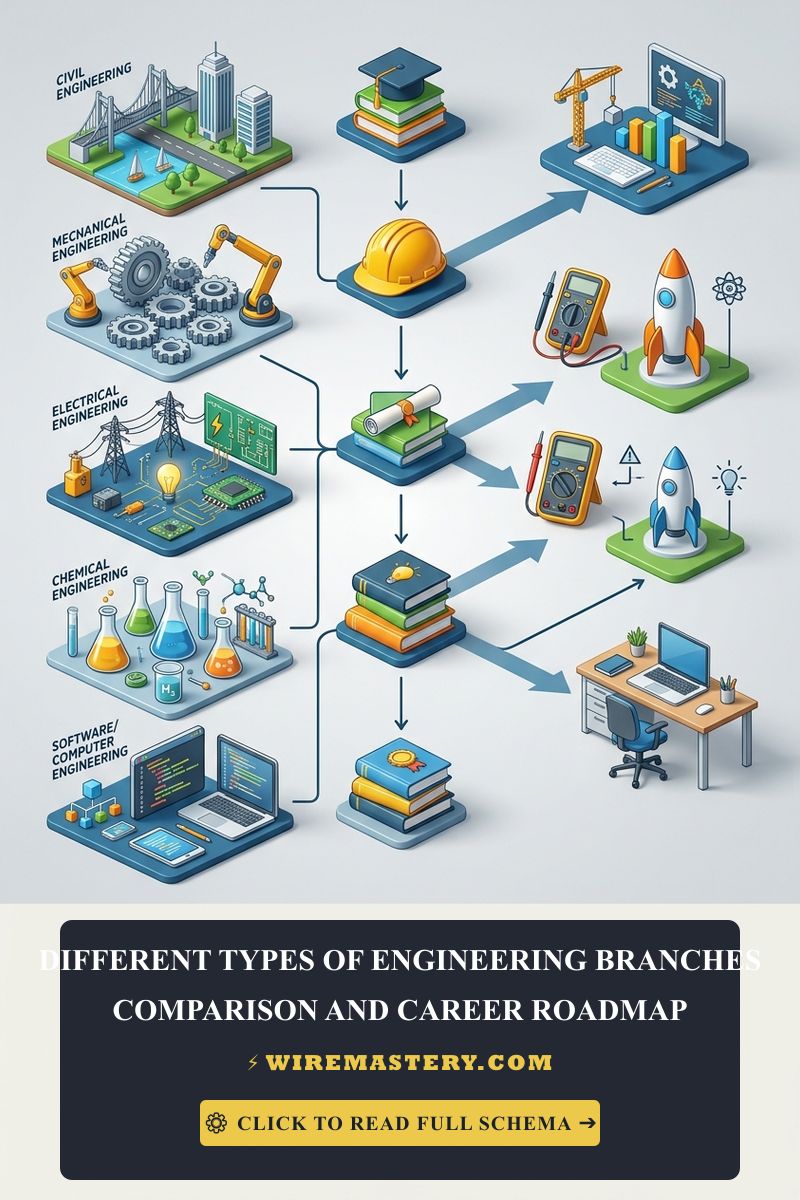
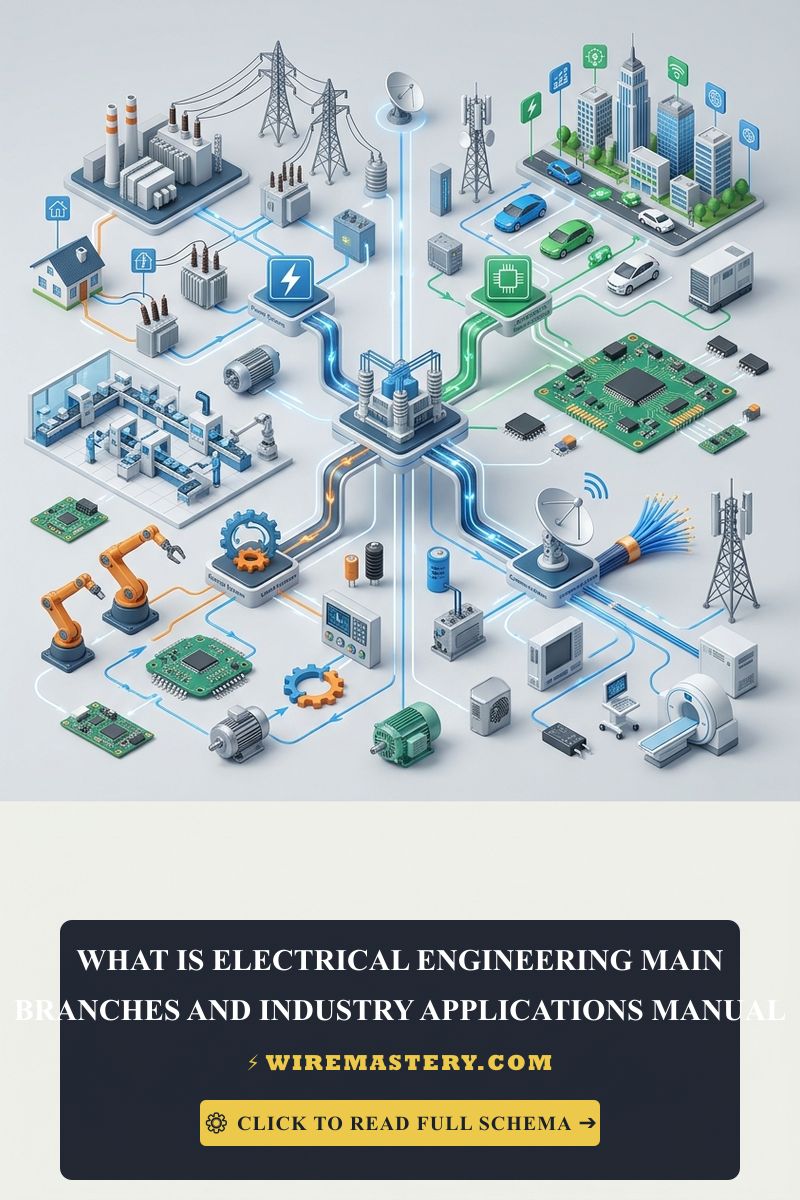
To accurately map out the technological landscape, the industry categorizes electrical engineering into highly specialized branches, each executing dedicated infrastructure roles:
1. Power Engineering (Utility-Scale Infrastructure)
Power engineering concentrates exclusively on the thermodynamic generation, long-distance transmission, and localized distribution of high-voltage electrical energy.
- The Grid Architecture: This branch manages massive multi-phase generation facilities (such as hydroelectric dams, nuclear reactors, and utility-scale solar arrays), step-up transmission substations operating at hundreds of kilovolts (kV), and localized step-down transformer sub-stations that deliver stable split-phase power to consumer grids.
- System Integration: For localized micro-grids or mission-critical data processing zones requiring absolute power continuity during grid dropouts, refer to our comprehensive design manual on uninterruptible power supply wiring and load calculation standards.
2. Control Systems Engineering (Industrial Automation Logic)
Control systems engineering applies advanced control theory to model, analyze, and design automated logic architectures that dictate how dynamic machinery behaves over time.
- The Logic Loop: Utilizing complex feedback loops, proportional-integral-derivative (PID) mathematical algorithms, and Programmable Logic Controllers (PLCs), control engineers stabilize fast industrial automation systems. Applications span from adjusting heavy mechanical valves inside automated chemical processing facilities to running high-precision variable frequency drives (VFDs) that regulate commercial building HVAC airflows.
3. Electronics & Microelectronics Engineering (Solid-State Semiconductors)
This pillar focuses on the design, optimization, and fabrication of discrete solid-state electronic devices, embedded microcontrollers, and integrated circuits (ICs).
- The Semiconductor Framework: Electronics engineers manipulate the quantum physical characteristics of doped semiconductor materials (such as Silicon or Gallium Nitride) to synthesize p-n junctions. These forms act as the building blocks for modern transistors, allowing microchips to process binary logic states at sub-nanosecond speeds.
- Circuit Protection: To protect delicate microprocessor layers from high-voltage inductive surges, engineers integrate precise clamping components. Explore the mathematical parameters of these layouts in our comprehensive guide on transient voltage suppression TVS diode protection circuits.
4. Telecommunications and RF Engineering (Data Propagation Highways)
Telecommunications engineering designs the hardware infrastructures and protocols required to modulate, transmit, and decode data streams across long-distance communication channels.
- The Transmission Matrix: Operating across both guided copper/fiber-optic lines and unguided free-space wireless mediums, this discipline relies heavily on electromagnetic wave theory. RF (Radio Frequency) engineers balance transceiver impedance layouts, design phased-array antennas, and calculate link budgets to maintain immaculate data packets over cellular networks and satellite links.
5. Signal Processing (Algorithmic Digital Waveform Manipulation)
Signal Processing is the algorithmic and mathematical core that analyzes, filters, transforms, and compresses time-varying physical waveforms into clean, structured digital data assets.
- The Algorithmic Domain: Operating at the intersection of advanced mathematics and computing, this branch converts continuous analog real-world signals into discrete digital representations using Fast Fourier Transforms (FFT) and discrete time filters. Applications range from filtering audio noise tracks out of communication streams to processing high-definition imagery inside medical MRI diagnostic blocks.
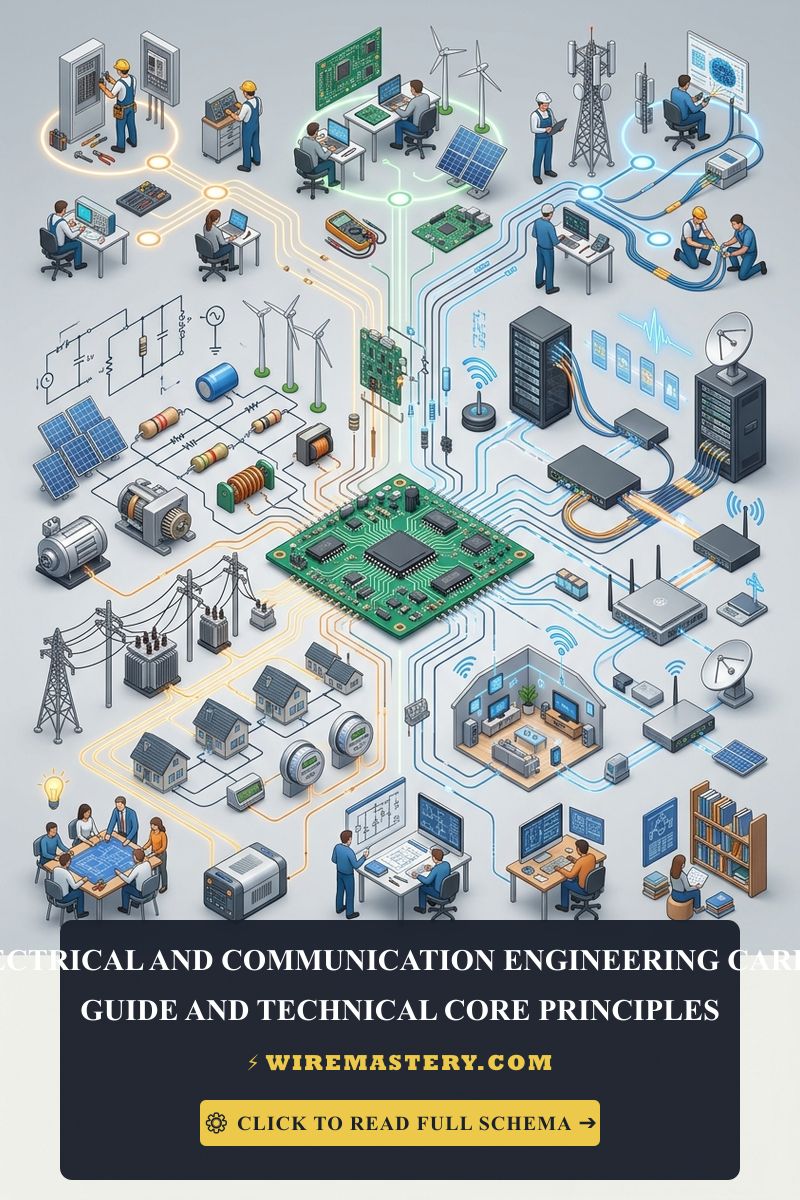
🛠️ Solid-State Thermal Management Note: Look closely at the micro-electronic substrate layouts displayed across our technical design blueprints. Notice how high-speed digital processing chips require dedicated thermal copper pours and localized decoupling capacitors. When routing trace layouts for microcontrollers, placing a 0.1µF ceramic capacitor as close as physically possible to the chip’s power pin shunts high-frequency switching noise directly to the ground layer, preventing data corruption and logic state chattering.
Technical Phase: Executing an Active BJT Switching Circuit Audit
To bridge theoretical electronics engineering concepts with physical hardware troubleshooting, engineers perform structured benchtop voltage audits using a digital multimeter. For a detailed breakdown of these solid-state dynamics, cross-reference our core manual on BJT transistor working principles and characteristics.
The Three-Point Semiconductor Voltage Sweep
- Connect your prototype BJT NPN switching circuit to a regulated 5V DC power supply line.
- Rotate your digital multitester dial to DC Voltage mode (V_avg). Attach your black probe firmly to the system ground rail.
- Execute the Multitester Readings Matrix:
- Measure the Base-to-Emitter Junction (V_be): Touch your red probe to the transistor base pin. When the upstream microcontroller pins drop a high logic signal, the meter must display approximately 0.7V DC. This proves the internal silicon p-n junction has crossed its forward-bias threshold and is actively conducting.
- Measure the Collector-to-Emitter Junction (V_ce): Move the red probe to the collector pin. If the transistor is successfully driven into full saturation mode (acting as a closed switch), the voltage should drop down to less than 0.2V DC, confirming a low-resistance path to ground.
- Open Loop Cutoff State: Turn off the microcontroller input signal. Test V_ce again; the meter must instantly jump to match your full supply line (5.0V DC), confirming the internal channel has entered an absolute open cutoff state.
IEEE Global Infrastructure Compliance & Safety Standards
Adhering to strict international technical standards protects delicate electronic grids, ensures device interoperability, and prevents catastrophic failures across commercial networks. The industry is globally regulated by the IEEE Standards Association and national safety frameworks:
- IEEE 802 Local Area Network Rules: This family of standards regulates the physical and data-link layers of global networking configurations. From standard hardwired Ethernet frameworks (IEEE 802.3) to wireless mesh grids (IEEE 802.11), these rules dictate exact packet scheduling, collision avoidance, and signal modulation parameters.
- Electromagnetic Compatibility (EMC) Enforcements: Every electronic device engineered for commercial distribution must pass rigorous EMC testing to confirm its localized radio frequency emissions stay below maximum thresholds, preventing high-frequency inductive cross-talk from corrupting adjacent processing tracks.
Conclusion
This article explains the main branches of electrical engineering, modeling complex bimetallic feedback paths, and executing micro-scale semiconductor circuit audits transforms raw electronics troubleshooting into a highly predictable, systematic science. By mastering macro power utility grid load parameters, routing shielded twisted-pair category cabling in strict alignment with communication codes, and validating solid-state logic transitions with auto-ranging multi-testers, you construct extremely resilient technology frameworks. For final checks, complete benchtop power isolation safety protocols, deploy CAT III certified field instruments, and execute every micro-component termination step with precision.